PLQ2.2 – BEP

Hello BIMfans,

After synthesising non-graphical data out of the various documents I received when we bought our house and generate a spreadsheet of Existing Information, I now need to plan to create my BIM Execution Plan to satisfy my next Plain Language Question.

So what is a BIM Execution Plan or BEP?  By referring to BRE’s BIM Terminology tool, a BEP is defined as:

Plan prepared by the suppliers to explain how the information modelling aspects of a project will be carried out.

So a plan is needed, but when writing a BEP there is a fine line between Genius and Madness…

Rimmer
It took Rimmer seven weeks to write this BEP, and now he’s got to cram all of this information modelling into one night…

The idea is that the BEP is the project’s master reference file; any question a supplier has about information modelling, the answer should be written in it.

PAS1192-2 it outlines what content should typically appear within a BEP, and there are templates also available online such as the ones developed through CPIx.  However, these are not perfect and conflict with the standards, so I have decided instead to make my own. A BEP comes in two forms: Pre-contract to advise the employer how a supplier will comply to their requirements at tender stage, and post-contract as a tool for information modelling during the course of the project.

Please note, I have not written (and don’t plan to write!) a pre-contract BIM Execution Plan. The main reason is that as I am doing the work for myself so there’s no Tender Evaluation, therefore its purpose doesn’t exist.  In addition, the key elements of a pre-contract BEP such as a summary of supply chain experience, project goals, and milestones are not applicable for a 1 man 1 phase project.

So I have instead focused on delivering my post-contract BIM Execution Plan.  There are four key areas of a BIM Execution Plan:

  1. Planning and Documentation
    The documents, and forms outlining the who, what, and when
  2. Management
    Who is doing what, when will it be done, and what is required
  3. Standards, Methods, and Procedures
    The rules of play
  4. IT Solutions
    What IT formats/systems will be used

I filled each section in my first adding all the headings from PAS1192, then by reviewing my Employer’s Information Requirements and populating each heading to satisfy what I have asked for.  This means that I have a reference document heavily aligned to the employer’s requirements.

Hannibal
Hannibal loves it when an Execution Plan comes together


There you have it, by working through the Employer’s Information Requirements I had written, I have now created a draft BIM Execution Plan for the development of my house’s Information Model.

BEP
The BEP can be accessed here

Before I start using it however, I am going to need to make sure it is fit for purpose, so I will be asking for a peer review.  Until then I won’t consider this PLQ complete.

Model Generation:
2.1 What existing information is available?
2.2 Is there sufficient information to produce a BEP?
2.3 What is the layout of the house?
2.4 What assets are contained within?
2.5 What asset information can be linked to the graphical model?

Now that I have my draft BIM Execution, I need to programme what models I need to create and when.  To do so I will need to generate a Master Information Delivery Plan (MIDP)…

Note:  If you have any comments or opinions regarding my BIM Execution Plan, please let me know either on twitter, or commenting below.

PLQ2.1 – Existing Information

Hello BIMfans,

After producing my EIR and having it verified by industry peers, it is time to pass the baton and view this blog not from the perspective of an Employer, but from the perspective of a Supplier.

Passing the Baton
I apologise for this terrible image

So as a Chartered Architectural Technologist, let’s look at this EIR from an architectural perspective and decide what I need to do.  As one of my reviewers Chris Weston pointed out in my last post, there was a need to clarify what existing information is already available to me as the Supplier.  To do so I have referred to the EIR and have identified that the following documents have been made available for use:

  • 2 Property condition surveys (1996, and 2015)
  • Land registry information
  • FENSA certificates
  • Gas and Electric safety test data
  • Energy performance certificate (EPC)
  • Boiler installation and warranty information

Now before I draft my BIM Execution Plan (BEP), the key supplier reference document, I should look at these existing documents to see what information I can extract.

By doing this I can determine what further investigation is needed and incorporate into my BEP.  Also, if I was bidding for this job, it would allow me to tighten my scope of service by limiting the amount of information I would need to produce as this information has already been collected by others.

Now there are professional services such as ProductXchange, a solution by CoBuilder that can extract product data from documentation such as these. However, I have chosen instead to do this the long way.

LongRoad.png
A journey of a thousand Excel cells begins with a single sigh.

To get this information into a usable format I have read through each document and input the relevant information into an excel spreadsheet.  Funnily enough, I did not intend to create a COBie file, but as I began to input information, I realised that I needed structure so I stuck to what I know, and it came a COBie file (of sorts).

COBie was mentioned previously when I answered my Plain Language Question around Data Requirements.  COBie in brief, is a method of structuring non-graphical information about an asset and can be used to share information in a consistent and structured manner.  In BS1192-4 it gives the requirements for creating a COBie compliant output and includes the required (referred to as ‘expected’) fields, as well as its overall structure.  Had I intended to use COBie initially for this exercise I would have used one of the template files available within the MoJ example from the BIM Task Group website; instead I have retroactively applied the COBie structure to my excel sheet.

By reviewing these documents I have managed to extract a surprising amount of information.  Using the original estate agent information I was able to extract space (room) details; some dimension information was also included but it is not accurate enough for my needs so it was not included.  After reviewing the earlier property condition report I found that it was superseded by the one I had commissioned last year, which when reviewed gave me a wealth of information about my house and the condition of items within.  The FENSA certificates confirmed who the installer was and the installation date for my windows.  Finally, the gas and electrical testing information also proved useful in determining some basic information about my cable and pipe system as well as when they were last inspected.

HouseCOBie
The spreadsheet can be accessed here.

Note:  The spreadsheet I have created is not fully aligned to BS1192-4 and should not be considered COBie-UK 2012 compliant.  There are a number of limitations due to the fact that information was input freehand meaning that there is no external system, also without objects to extract information from I have defaulted to a descriptive name, and have not included any type or assembly information.  I have also added a bespoke property ‘ReferenceDocument’ to indicate where this information was extracted from.

There you have it, by working through the information I already have about my house I have managed to collect a lot of Information without doing any surveying, measuring, or Googling.  Saving time, and providing a good basis to begin the creation of my information model.

This means that I have now answered another Plain Language Question; PLQ2.1 Complete!

Model Generation:
2.1 What existing information is available?
2.2 Is there sufficient information to produce a BEP?
2.3 What is the layout of the house?
2.4 What assets are contained within?
2.5 What asset information can be linked to the graphical model?

Now that I know what relevant existing information I have available, I need to now work out how I plan to create my information model.  To do so I will need a BIM Execution Plan to satisfy PLQ2.2…

Note:  If you have any comments or opinions regarding my extraction of existing information, please let me know either on twitter, or commenting below.

PLQ1.6 – EIR Feedback

Hello BIMfans,

Following the publication of my draft EIR a fortnight ago, I decided that I need to get some feedback to ensure that what I have written is suitable.  Having worked on both the client and supply side in the past I am confident in my work, but it is always good to get some fresh perspectives.  As such I asked a few friends in the know.

3Amigos
Meet Dusty, Lucky, and Ned…providing a plethora of piñatas feedback

I asked each of them to review my EIR as if I was procuring them to undertake the work, as well as asking for any suggestions they had to improve this document.  Here is what they had to say:

ChrisWestonChris Weston, Associate for Rio Architects.

Rio Architects are a Cardiff and London based Architectural firm whose mission is to exceed client expectations through sustainable and economically viable solution.

“If Dan brought this job to Rio, while I appreciate it is a simple project, we would be looking for a bit more clarification on a few items including details of roles including the Project Delivery Manager, Project Information Manager and Employer’s Representative. We would also be asking for clarification on the availability and details for any existing asset information well as clarification regarding whose responsibility it is to host the Common Data Environment.  Further detail would also be needed around the Employers Decision Points to enable the effective management of the Supplier Information Exchanges.

This EIR is clear, concise, and hopefully goes some way to demonstrate that BIM isn’t only about big hospitals and schools and that clients can tailor the process to suit even the most modest projects, even a pancake house.”  7/10

HenryHenry Fenby-Taylor, BIM Implementation Manager for WYG Group, and co-founder of dotBuiltEnvironment.

WYG are a project management and global technical consultancy group that provide bespoke solutions to achieve client ambitions.

“An EIR needs to be a well thought out, lean, and relevant document that is project specific and specific to the needs of the employer. This is what I have seen in Dan’s EIR. However falling foul to the terminology it still remains relatively inaccessible to the untrained eye, but to the trained eye? It’s tight, it doesn’t have any flab, it doesn’t ask for anything it doesn’t need, it specifically states where certain aspects of the BIM level 2 standards are not necessary such as the management of security assets.

Where the EIR is less well refined is the specific requirements for data. While the core elements are included, more thought could be provided to make these requirements clearer. The specific data associated to the assets being managed and maintained are to my mind the the core purposes of the information requirements.” 8/10

Paul
Paul Surin, Head of Built Environment for Weinerberger, and vice-chair of BIM4M2.

Weinerberger are the world’s largest producer of bricks and a leading provider of clay roof tiles, concrete pavers, plastic and ceramic pipe systems and provide a myriad of sustainable and innovative solutions.  Paul is also a BRE BIM Level 2 Certificated Professional.

“I have had a chance to review Dan’s EIR. The project is related to a domestic house. The wider industry would not normally associate BIM with a house; some would even say it is an overshoot. I disagree and I like Dan’s approach.

This is something we, at Wienerberger, have been working on for last couple of years – BIM in housing, such as our e4 house. This EIR’ seems to be very clear and very easy to understand as a supplier. In this case a supplier could be a bricklayer, a merchant, a carpenter, a plumber etc. so it is vital to define and spell out his requirements in plain language.

I would not specify WIN 7 and Intel i7 within the IT Section. I understand it might be the PC Dan uses however it could limit some suppliers who use Apple or an Android. Perhaps if a definition of a CDE with a web-browser viewer (to allow annotations, collaboration and clash detection via a cloud) it would eliminate any need to specify any operating system.” 8.5/10

Thank you everyone.  Following these reviews, I have revised my EIR by including information regarding the Employer’s Representative and their contact details, confirmation that the Employer Decision points are covered within section 3.1, further detail on the need to appoint and specify who is undertaking the Project Information Manager and Project Delivery Manager roles, clarified my data requirements as well as added further clarity around the IT constraints.  As such, I have now settled on the final published version:

EIR Front
The Finalised EIR can be accessed here

There you have it, by gaining some much needed insight from the industry I have now improved my EIR and gotten it validated too, fantastic.  This means that I have now answered my final Brief Plain Language Question; PLQ1.6 Complete!

Brief:
1.1 Have the purposes of the model been defined?
1.2 Are there any specific data requirements to achieve these purposes?
1.3 What format shall the information be delivered in?
1.4 What standards will be followed?
1.5 What level of accuracy/detail/development is required?
1.6 Is there sufficient information to produce an EIR?

Now that I have my EIR finalised, I need to put my supplier hat on and start working through I now I plan to execute this, but first let’s go through all of the Existing Information

Note:  If you have any comments or opinions regarding my EIR please let me know either on twitter, or commenting below.

Internet of Things

Hello BIMfans,
While my draft Employer’s Information Requirements (EIR) is out for consultation I wanted to talk another related project I have been working on; trying to make my home a little smarter.

Before we moved into our house I daydreamed about the kind of ‘smart’ things my house would do.  So when we moved in there was obviously a purchase I needed to make straight away; I got myself a Nest thermostat.  The house had no thermostat at all, meaning that I would have to control the heating by punching the boiler’s clock guessing when I’d need the house heated.  Now I am able to program my heating either directly through the thermostat or through its mobile app; meaning on a chilly day I could switch the heating on while I head home, or make sure it isn’t heating while I’m away.

The real value however is its ability to be part of the ‘Internet of Things’ (IoT).  IoT is a data exchange network of connected devices, software, and sensors allowing data from one influence another.  For example I have been using IFTTT to allow my house to speak to me.

Hal9000.png
I’m sorry Dan.  I’m afraid I cannot do that

IFTTT (If this then that) is a simple automation service allowing products, sensors, and services to trigger actions.  For instance, since setting it up last week I have set up a number of recipes:

Home Reporting:
I currently have the following recipes set up using smart devices in my home.

  • If (Nest Thermostat Temperature > 24°c), then (let me know)
  • If (Nest Thermostat Temperature < 15°c), then (let me know)
  • If (Nest Protect Battery Level = low), then (let me know)
  • If (I’m near by house), then (turn on mobile wifi)

Automatic Reporting:
I also have the following recipes set up using data from outside of my house.

  • If (Time = 07:00), then (report the weather forecast)
  • If (Time&Date = Monday, 21:00), then (remind to put the bins out)
  • If (Weather = Rain), then (let me know)

In a moment of genius madness, I decided that the best method of having this information exchanged was over twitter, meet Ty Crempog (@TyCrempog):

TyCrempog

After joining twitter last week, my house has already gained 16 followers, and has automatically sent me over twenty tweets including daily weather reports, a reminder to put the bins out, and this message to let me know my living room was getting quite warm.

I hope to expand its ability by integrating other smart products and services when I deem their automation useful.  For instance, I’m going to be getting myself a Phillips Hue starter set this week and using IFTTT to set up a few automations such as having my hall lights switch on at sunset.

The most important thing for me to consider is the value and risk of automation. I could for example have my living room temperature tweeted every degree change, but that doesn’t provide any value and would allow someone to see when I am not home.  So for now I will stick to trying to improve my home, one smart choice at a time.

So now that I have had my respite, let’s find out how my Employer’s Information Requirements fared following it’s review…

PLQ1.6 – EIR

Hello BIMfans,

After completing my review of what Levels of Definition I will require last week, I am now going to see if I have enough information to draft my Employer’s Information Requirements (EIR).   So what are the Employer’s Information Requirements?  Well according to the BRE BIM Terminology tool, an EIR is a:

Pre-tender document setting out the information to be delivered, and the standards and processes to be adopted by the supplier as part of the project delivery process

In addition, PAS1192-2 states that the requirements within the EIR should only contain enough SMART requirements to satisfy the Employer Decision Point aligned  Plain Language Questions.

Note:  It is worth saying that there are strictly 3 feeder documents for the EIR:  Plain Language Questions (PLQs) which I have, as well as the Organisational Information Requirements (OIR), and the Asset Information Requirements (AIR), which I don’t.  As a one man client it felt a little over the top, so any Organisational or Asset requirements have instead gone straight into my EIR.  If you want to know more about these documents, have a look at PAS1192-3, figure 4, and ISO55000 series.

So what requirements do I need to satisfy my  Model Generation questions?

2.1 What existing information is available?
I already have a lot of information about my house including a number of condition reports (see prologue) that I will want included as past of my asset information.  Luckily, I have already specified how I want this data formatted when I wrote my data requirements, so I will need to ensure that my EIR states the need to include this information.

2.2 Is there sufficient information to produce a BEP?
Before any information is produced I’ll need a BIM Execution Plan (BEP) in line with PAS1192-2.  The BIM Execution Plan has it’s own requirements that I’ll discuss when I produce it, so for my EIR I’ll also need to specify anything in particular I want within BEP, including confirmation of who is undertaking particular information management roles, how various elements will be managed, and what information will I be receiving.

2.3 What is the layout of the house?
To capture the layout of my house I will need to ensure that it is developed with an agreed coordination point in mind.  In addition, I want it to be delivered in .pdf, named and layered to suit the BS1192 naming conventions, room numbers to BSENISO4157-2, and the use of standard symbology found in BS8541-2.

2.4 What assets are contained within?
To know what assets I have within my home I will expect a COBie-UK deliverable which includes this information, meaning that the objects will need their property information to comply with BS1192-4 requirements, and be named to BS8541-1.  While developing this information model I will also need confirmed how the models will be segregated, if at all.

2.5 What asset information can be linked to the graphical model?
Luckily I have already specified what information I will need within my assets when I wrote my data requirements so that I have enough information to undertake my model purposes during it’s operation and maintenance.  So I will need to specify that I want this information included in my information model.

In addition. To receive this information I will need to know how this information will be exchanged, that it has undergone a sufficient level of rigour in its development and approval, and that it is formatted to suit the software and hardware that I have.

So with this in mind it seems I have all the information I need to produce my Employer’s Information Requirements. Using PAS1192-2 and the BIM Task Group’s EIR guidance document as a basis, I have now populated a draft set of Employer’s Information Requirements which can be accessed here:


EIR Front
The EIR can be accessed here

I hope that some of you may review this document and pass comment before it is formally signed off as the EIR I will use for my house next week.  Until then I won’t consider this PLQ complete.

Brief:
1.1 Have the purposes of the model been defined?
1.2 Are there any specific data requirements to achieve these purposes?
1.3 What format shall the information be delivered in?
1.4 What standards will be followed?
1.5 What level of accuracy/detail/development is required?
1.6 Is there sufficient information to produce an EIR?

Now that I have drafted my EIR I need to check how fit for purpose it is, so let’s ask a few Designers; but first I want to talk about my Smart Home

Note:  If you have any comments or opinions regarding my Employer’s Information Requirements, please let me know either on twitter, or commenting below.

PLQ1.5 – Level of Definition

Hello BIMfans,

After completing my schedule of required Standards last week, I am only one Plain Language Question away from being ready to produce my Employer’s Information Requirements.  So let’s tackle PLQ1.5 and discuss Level of Definition.

Now in a slightly different format to usual, this week I will be tackling Level of Definition with an example; before that let’s define Level of Definition.  Using the  BRE Terminology tool, Level of Definition is:

Collective term used for and including ‘level of model detail’ and the ‘level of information detail’ – PAS1192-2

Ok, now to understand what ‘level of model detail’ and ‘level of information detail’ are, I will refer to work done by NBS with their BIM toolkit; where there is an article that defines both these terms.  In short:

LOD (Level of Model Detail):  Is the numerical value related to the amount of graphical detail included within an object related to the digital Plan of Work (dPoW) stages. Objects start conceptually (LOD2), develop to generic representations (LOD3), then developed further to match the geometry of the specified element/product (LOD4), and finally developed to include supporting detail for construction and installation (LOD5).

LOI (Level of Information Detail):  Is a non-graphical equivalent of the process described above. Objects start with an outline description (LOI2), then develop to include performance criteria (LOI3), then developed further to include information on the specified element/product (LOI4), then developed to include information on any associated (child) products (LOI5), and finally developed to include installation and maintenance information (LOI6).

The simplest to determine is what Level of Information I need.  As I stated when I looked at my Model Purposes and Data Requirements, I will be using my information model to undertake ‘Maintenance and Repair’ & ‘Replacements’.  Therefore I will need installation and maintenance information; requiring Level of Information Detail (LOI) 6. Level of Model detail, on the other hand, is a bit more complex; have a look at this example.

In my home I have an indoor Rabbit called Crempog (Welsh for pancake), he’s a dwarf-harlequin rabbit and spends his day roaming the house (eating EVERYTHING) and at night he stay’s in this cage:

20160502_111653
“Daddy, I don’t give you permission to use my image”. “Silly Crempog, rabbits can’t speak”

As his cage is fairly expensive and takes up a lot of space I will want to capture its information, but I was unsure how much model detail I really need?  So, as usual, I asked Twitter:

With Twitter unsure, I decided to take matters into my own hands and produce a few objects.  Shown here are three different objects that I have created for Crempog’s cage. Each has the same Level of Information Detail, but a different Level of Model Detail.

 Cage2  Cage3  Cage4
LOD: 2 LOD: 3 LOD:  4/5
Time Taken: 1 minute Time Taken:  5 minutes Time Taken:  20 minutes
File Size:  280kb File Size:  340kb File Size:  1104kb

Note:  As there is no Level of Model Detail definition for Animal Housing (Pr_40_30_04, in Uniclass 2015), an assumption was made by comparing pre-defined LOD4’s from Structural Decking where voids are included; and Expansions joints where elements under 10mm are included as justification for modeling the cage bars.  

As you can see by increasing the level of graphical detail it takes longer to produce the objects and the file’s get larger too.  Meaning that any detail above what is required can be seen as overproduction (a waste of effort!); it is important to consider how the cage’s object will be used and seen (remember, visualization was not identified as a Model Purpose).

Typically, models are produced to a scale of around 1:50; a balance between performance, resource, and use; matching the coordination view outlined within BS 8541-3.  Objects within graphical models are normally used to create other deliverables such as drawings.  If you want to create a detailed view (for example, a roof abutment detail) it is much more resource and memory efficient to overlay details over generic model elements instead of modelling every tile, batten, and brick.

For my house, the rabbit cage would only appear on a floor plan drawing, which I expect to be at 1:50 to fit both the ground and first floors on a single A3 sheet.  At 1:50 the cage would have bars at 0.06mm spaced at around 0.5mm.  Plot lines go as fine as 0.18mm meaning my cage would basically look like one big black blob.

And there you have it. By working through an example I have decided that I need my Level of Information to be at LOI6 so that operation and maintenance information is captured to suit my Model Purposes, and I need my Level of Model Detail to be no more detailed than LOD3 to ensure that I only model what I need to show.

This means that I have now answered another Plain Language Question; PLQ1.5 Complete!

Brief:
1.1 Have the modle purposes been defined?
1.2 Are there any specific data requirements to achieve these purposes?
1.3 What format shall the information be delivered in?
1.4 What standards will be followed?
1.5 What level of accuracy/detail/development is required?
1.6 Is there sufficient information to produce an EIR?

Now that I know my required Level of Definition, I need to establish if I have enough information to create my Employer’s Information Requirements to satisfy PLQ1.5…

PLQ1.4 – Standards

Hello BIMfans,
Now that I have established what my Data Requirements and Information Formats are, I now need to consider what Standards I want followed to make sure that the information I receive is right, complete, and structured correctly.

It is worth saying at the start of this post that (as a member of British, European and International Standards committees) I am a strong believer in adopting a standardized approach.  However, often when we are working we deal with Standards, instead of a Standard.

Toothbrush
Standards are like toothbrushes, everyone would rather use their own.

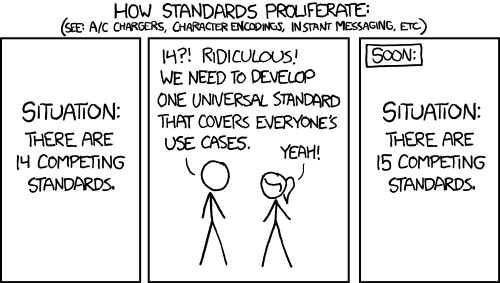
At BRE, I often audit for our BIM Business System Certification scheme. When auditing, I find it amazing how often I see phrases such as “BS 1192 amended/revised/inspired” when referring to naming conventions.  What also makes matters worse is when standards are developed often they are not considered holistically and as a result conflict with each other.

standards
If XKCD‘s Randall got a pound every time I tweeted this, he’d be slightly richer than he is now

As this blog is looking at promoting good practice, I will aim to follow existing standards where possible as opposed to producing my own.  On the Official BIM Level 2 Webiste, there are six ‘core’ standards identified which I will be following which are:

  • BS 1192; guidance on how to produce information using a standard file naming, revision, and suitability code convention, as well as exchanging information within a common data environment.  Note:  As I am a team of one I will not be following the common data environment exchange requirements.
  • PAS 1192-3; guidance on the relationship between the Employer’s Information Requirements (EIR) and other core documents from the organization and asset teams, as well as a definition for content included within an asset information model, and guidance on managing the asset information model throughout the asset’s life cycle.
  • BS 1192-4; guidance on how to structure an information exchange to COBieincluding how data should be presented, what the expected attributes are, and where to locate recommended type and system attributes.  Note: I will producing COBie compliant content.
  • PAS 1192-5; guidance on how to define the sensitivity of an asset as well as how to safeguard its information.  Note:  While my asset is not defined as ‘sensitive’, I will be requiring safeguards to prevent the release of any personally identifiable information on regarding the location of my home.
  • BS 8536-1 / BS 8536-2; guidance on forming Plain Language Questions, additional owner and operator information requirements, key employer activities at each project stage, and guidance on post-occupancy evaluation.

Those of you who have been paying attention will have noticed that most (if not all) of these standards have already been referred to in previous posts.  These six documents make up the ‘core’ set of BIM Level 2 standards, but they are not enough to manage a project, so I intend to refer to some additional Standards which will be outlined in future posts.

These Standards (as well as many, many others) will be used to structure my information as well as the key documentation that define relevant standards, methods, and procedures that well used to undertake the production of my information model.

And there you have it.  I have defined the standards that I intend to have followed.  This means that I have now answered another Plain Language Question; PLQ1.4 Complete!

Brief:
1.1 Have the model purposes been defined?
1.2 Are there any specific data requirements to achieve these purposes?
1.3 What format shall the information be delivered in?
1.4 What standards will be followed?
1.5 What level of accuracy/detail/development is required?
1.6 Is there sufficient information to produce an EIR?

Now that I know what standards to follow.  I need to now establish what Level of Definition is required for my information to satisfy PLQ1.5…

Note:  If you have any comments regarding my choice of Standards, then please let me know either on Twitter, or by commenting below.

PLQ1.3 – Information Formats

Hello BIMfans,
Now that I have established by Data Requirements related to my Model Purposes, I need to know what format I need this information in, as the format I choose will impact on how I can use my information.

Ok, imagine I stay in this home for 15 years.  I’ll need to make sure that the information I collect can still be read in 15 years time, right?

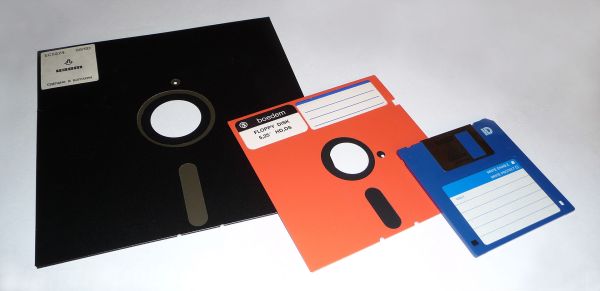
Well it isn’t as simple as it sounds.  For example, floppy disks were still a standard way of exchanging information 15 years ago, and were still being sold in the UK less than a decade ago!  Now it would be very difficult to access information on a floppy disk.

1920px-Floppy_disk_2009_G1
“Ohh cool, they look just like a save button” – Children everywhere

This problem also extends from the physical to the digital.  For example, SketchUp, since it started in 2000, has been owned by three different companies.  Who’ll own it in another 15 years time, and will it still be able to open these files?  The software I was trained in (Revit) has been showed to open files at least 10 years old but opening old Revit files isn’t always done smoothly, with similar issues also reported when opening older Excel files.  There is also the worry that the software used to create the files will no longer exist; even large companies like Autodesk retired software, like when Volo View was made redundant by Design Review back in 2005.

There is also the issue of interoperability.  As I intend to use the information I produce within other tools, there needs to be a good exchange of information to prevent the loss of information.

Square Peg in a Round Hole
My House data if I’m not careful.

To follow the BIM Level 2 process, PAS 1192-2 suggests that an information exchange includes the native file formats (the file you produced within), COBie, and .pdf.  However this will dependant on where the information will be used.

To manage my information once it has been produced, I intend to use is Chimni. Chimni is an (in development) log book/dashboard based home management system which will include functionalities such as: Interactive floor plans, an asset registry, and document storage.  Thinking back to my prologue, Chimni appears to fit my methodology perfectly.

Chimni
If you are serious about home management, Chimni is definitely worth a look

Through discussions with Nigel Wally and the Chimni team, the intention is that Chimni will accept several file formats (.jpeg, .pdf) as home information is likely to be received in this manner, as well as industry based formats such as IFC.

Therefore even though IFC is not required for BIM Level 2, I want to receive my information in IFC too.  Luckily, as I intend to also have COBie deliverables, my Data Requirements are all mapped to IFC making the export straightforward.

This means that I will want to receive my information in the following file formats:

  • Native file formats (e.g. .rvt, .pla)
  • COBie (.xlsx)
  • PDF (.pdf)
  • IFC (.ifc)

And there you have it.  By outlining my Model Purposes and Data RequirementsI was able to outline what formats I want to receive my information in.  This means that I have now answered another Plain Language Question; PLQ1.3 Complete!

Brief:
1.1 Have the model purposes been defined?
1.2 Are there any specific data requirements to achieve these purposes?
1.3 What format shall the information be delivered in?
1.4 What standards will be followed?
1.5 What level of accuracy/detail/development is required?
1.6 Is there sufficient information to produce an EIR?

Now that I know what formats to use.  I need to now establish what Standards I need to follow to ensure the quality of this information as well as to satisfy PLQ1.4…

Note:  If you have any comments regarding my intended information formats, then please let me know either on Twitter, or by commenting below.

PLQ1.2 – Data Requirements

Hello BIMfans,
Now that I have worked out what Model Purposes I will be using my information model for, I need to work out what information to produce to satisfy these Model Purposes.  To do so, I will be looking at several key British Standards around exchanging information.

I’ve already discussed information exchanges when I formed my Plain Language Questions (PLQs).  In brief, within the BIM Level 2 process, there is a clear mechanism outlined within PAS 1192-2 to allow information to be exchanged from the supply chain to their employer.  The UK Government has outlined that its preferred method of exchange is through Construction Operations Building information exchange (COBie).

COBie
Don’t let her acting career fool you,  Cobie is a key actor in BIM.

So why COBie?  Well within the UK there is (currently) no formal convention on how to structure information.  The relevant British standard for applying properties to objects is BS 8541-4.  However, this standard is limited to: Guidance information on units, to name properties using CamelCase (no spaces), and that properties suggest what type of data should be used within.  However, BS 8541-4 uses examples that conflict with its own guidance…

Capture
CamelCase? No thank you, I don’t smoke.

However, despite this conflict, BS 8541-4 does provide real value and quite usefully refers to using the Industry Foundation Class (IFC) schema, which covers property naming, units, and property sets; developed by buildingSMART.  So I will limit myself to properties that appear within the IFC schema, specifically using the IFC2x3.

Luckily for me, by following IFC, I will also need to provide information in a COBie compliant structure.   In brief, COBie is an IFC file filtered to remove geometry and retain only the information to be handed over, complying with the COBie 2.4 MVD. Meaning that if I use the IFC2x3 Schema to add attributes, mapping to COBie’s structure should be a fairly simple process.

Note:  I’m not going to explain COBie in detail here, but if you want to know more Rob Jackson of Bond Bryan Digital has collected several COBie resources on one easy to access web page here.

So by using IFC, I can structure my asset information based on an internationally accepted open data schema. Meaning that I’m more likely to be able to use this information in other tools.  If I didn’t use IFC, then there would no doubt be issues with exporting information:

GiGo
Garbage in = Garbage out.  Explains the need for good data in construction (and my A-level results).

So now that I how I want to structure this information, I need to work out what information I want to capture based on my intended Model Purposes.

Register

I want to use this model to register each of my components.  By registering these components I can keep an inventory for content insurance purposes and to facilitate any other purposes such as repair and maintenance.  To register my components I need to include a unique reference, so I’ll need a ‘GUID‘, as well as the component’s ‘Name’Manufacturer‘, ‘Model‘, and if applicable ‘ModelReference‘.  I will also need to know when each component was installed my including an ‘InstallationDate‘, as well as its ‘ReplacementCost‘.

To register each of these components I also need to know what room they are in, so I need to register my rooms including ‘Name‘ and their ‘Description‘; both found under ‘IfcSpace‘.

Operations

As I stated when discussing my Model Purposes, this model will likely not be used for day-to-day operation, but I do plan on using information from the model to undertake a future SAP calculation, and will likely need to use this information if I have many minor works done to my home.  By capturing this information, I will also have the information needed to run any operational analysis in the future.

For the house itself, I need to know the ‘NumberOfStoreys‘ the house’s air permeability ‘Infiltration‘, as well as a custom property for my EPC Rating.  I couldn’t find a suitable property within the schema, so I will create one called ‘EPCRating‘.

For my floors, I need to know their ‘Height‘, ‘Area‘, and ‘Elevation‘.  Each of which can be captured by the base quantities.

For components (where applicable) I will also need to capture their geometry details such as ‘Height‘, ‘Length‘, and ‘Width‘.  Details of components specification such as their ThermalTransmittance‘ (U-Value), ‘Infiltration‘, as well as the ‘TotalPrimaryEnergyConsupmtion‘ for any electrical components.  In addition, I couldn’t locate a property for SolarTransmittance (G-Value) under the IFC2x3 Schema, so I will need to create another additional attribute ‘SolarTransmittance‘.

Maintenance and Repair, Replacements

Much of the information identified to register my components will also be used to manage any repair and replacements.  In addition, I will also need to capture warranty information such as ‘WarrantyStartDate‘, ‘Duration‘, and ‘WarrantyContent‘.  In addition, to schedule any planned maintenance, I need to capture asset condition details under ‘AssessmentDate‘, ‘AssessmentCondition‘, and ‘AsessmentDescription‘ to form a preventative maintenance schedule.

And there you have it.  By using my Model Purposes I have now outlined the minimum attributes I need achieve them.  Meaning I have now answered another Plain Language Question; PLQ1.2 Complete!

Brief:
1.1 Have the model purposes been defined?
1.2 Are there any specific data requirements to achieve these purposes?
1.3 What format shall the information be delivered in?
1.4 What standards will be followed?
1.5 What level of accuracy/detail/development is required?
1.6 Is there sufficient information to produce an EIR?

Now that I know what information I need to support my Model Purposes, I need to establish what format I need this information in to make sure it is usable to satisfy PLQ1.3…

Note:  If you have any comments regarding my property data requirements, or the properties I have chosen, then please let me know either on Twitter, or by commenting below.

PLQ1.1 – Model Purposes

Hello BIM fans,
Before I finish forming a brief I need to work out what information I want to capture within my information model.  With access to so much information, it would be very easy for me to add too much detail (graphically or non-graphically) into my model which frankly I would never use, and could turn it into a bit of a lemon.

Lemon
I’d rather not have to make digital lemonade…

So to work out what information I need, I need to outline my model purposes; which will also allow me to satisfy my first Plain Language Question:

1.1 Have the model purposes been defined?

Defining these model purposes may be THE most important question that I will ask myself on this blog.

To determine what information should be produced, I need to use something as a basis. For this, (despite being VERY outdated) I chose to use BS 1192-4.  While principally focused on COBie, BS 1192-4 states that an employer should outline what purposes delivered information will be used for.  So going through each one, I have come up with the following model purposes I intend to use my information model for:

  • Register (5.2.2)
    The information model will be used to capture components in my house that I intend to manage.
  • Operations (5.4.3)
    I currently don’t plan to use the information model for day-to-day operation, but I will aim to monitor my house’s running costs and will use the information I collect to undertake a self-assessed SAP calculation following any changes I make to the house (because I can).
  • Maintenance and Repair (5.4.4)
    Replacements (5.4.5)
    This information model will be used to capture information to manage any repair and maintenance or (more likely) when I need to replace something.

It is unlikely that my information model will be used for the other purposes outlined within BS 1192-4 so I will exclude these.

And there we have it.  I will be using my information model to manage what I have in my house when they need to be repaired or replaced, and potentially enough information to allow me to model my operational costs and to be used for a SAP calculation.  Leaving me with the following Model purposes:

Proposed Model Purposes:

  • Registration
  • Operation
  • Maintenance & Repair
  • Replacement

This means that I now have a clear direction in how I want to produce my information model.  PLQ1.1 Complete!

Brief:
1.1 Have the model purposes been defined?
1.2 Are there any specific data requirements to achieve these purposes?
1.3 What format shall the information be delivered in?
1.4 What standards will be followed?
1.5 What level of accuracy/detail/development is required?
1.6 Is there sufficient information to produce an EIR?

Now that I know what purposes I want to use my information model for, I need to also outline specific Property Data Requirements of these Model Purposes to satisfy PLQ1.2…

Note:  If you have any comments regarding my proposed model purposes, then please let me know either on Twitter, or by commenting below.